4th MPISGCON
4th Annual Conference of ISG Madhya Pradesh
30th - 31st August
Imperial Golf Resort, Gwalior


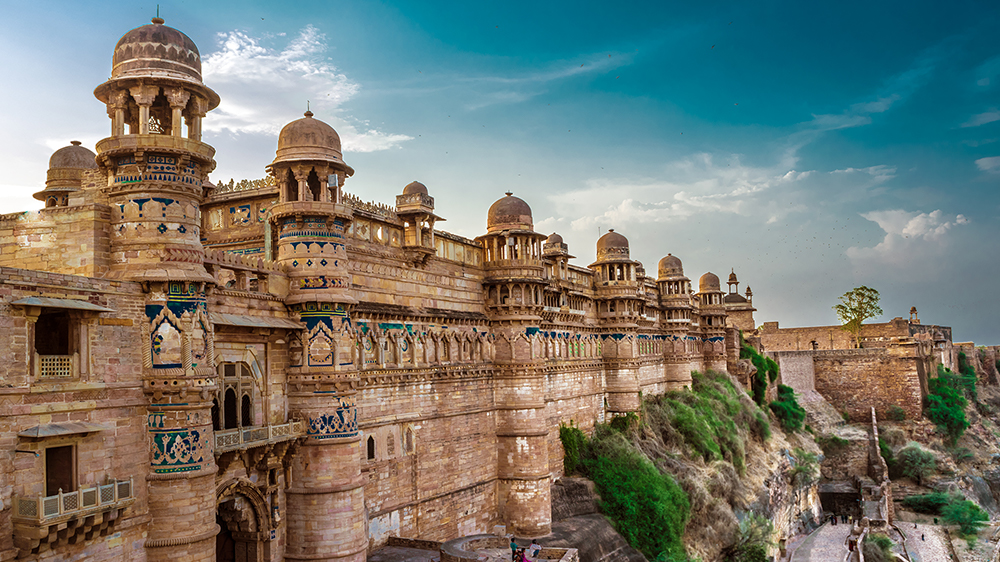
The Fort of Gwalior or the Gwalior Fort is a 6th century defence hill fort in Gwalior, India. Mughal Emperor Babur called it the "pearl amongst the fortresses of Hind" because of its impregnability and magnificence and it has also been nicknamed the Gibraltar of India. The history of the fort goes back to the 5th century or perhaps to a period still earlier. The old name of the hill as recorded in ancient Sanskrit inscriptions is Gopgiri. The current structure of the fort has existed at least since the 8th century, and the inscriptions and monuments found within what is now the fort campus indicate that it may have existed as early as the beginning of the 6th century, making it one of India's oldest defence fort still in existence.
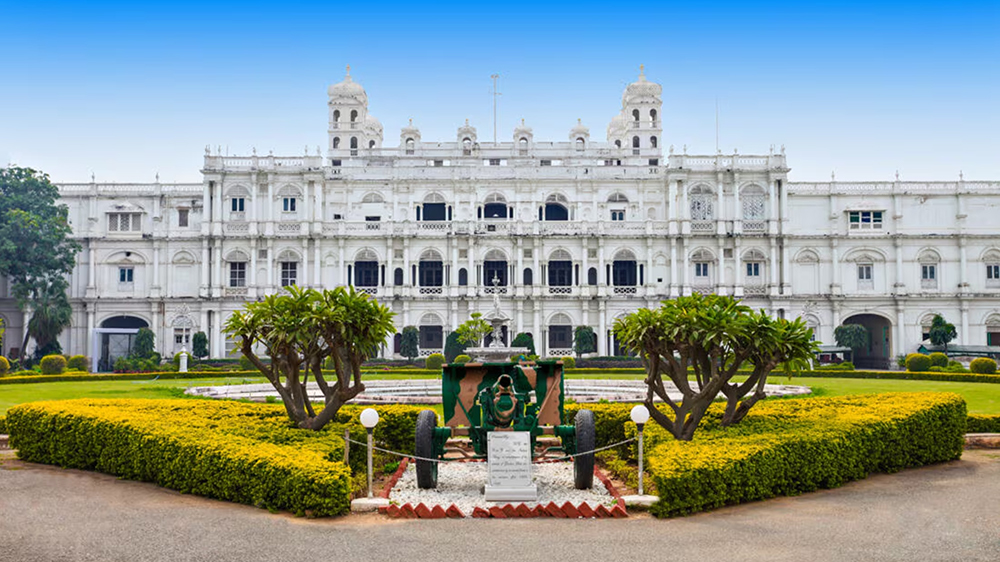
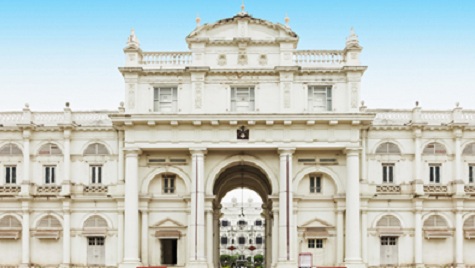
The Jai Vilas Palace, is a nineteenth century palace in Gwalior, India. It was built in 1874 by Jayajirao Scindia, the Maharaja of Gwalior in the British Raj. While the major part of the palace is now the "Jiwajirao Scindia Museum" which opened to the public in 1964, a part of it is still the residence of some of his descendants.
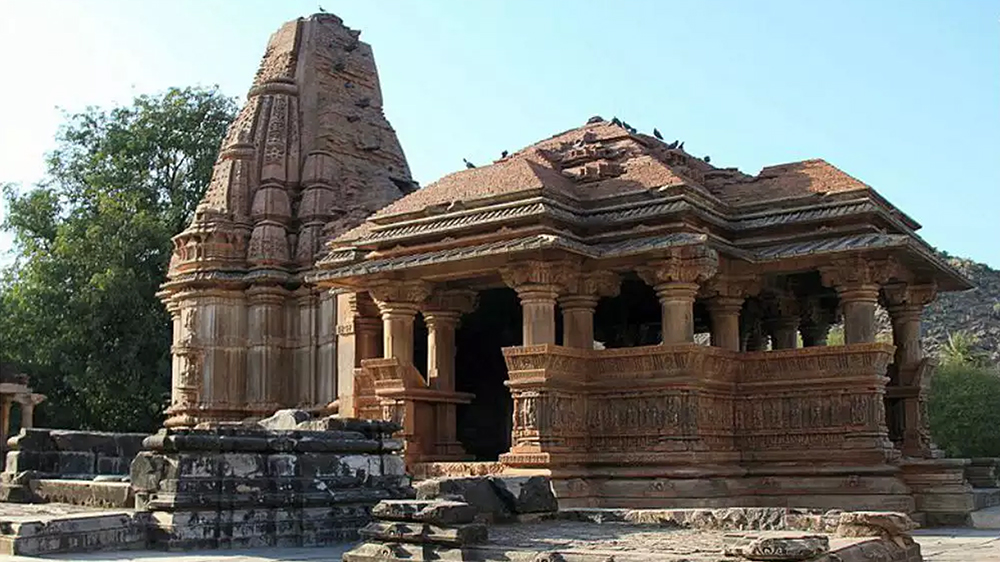
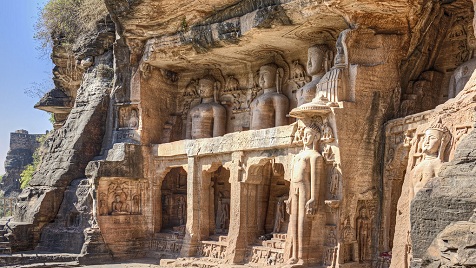
The Sas-Bahu Temple, also known as the Sahastrabahu Temple, is an 11th-century Hindu temple located in Gwalior, Madhya Pradesh, India. The temple complex within the Gwalior Fort includes two main structures: the larger "Sas" temple and the smaller "Bahu" temple. The name "Sas-Bahu" is believed to have evolved from the original name "Sahasrabahu," meaning "one with a thousand arms," which referred to Lord Vishnu. The temples are known for their intricate carvings and architectural details.
Located in the 15th-century Gujari Mahal, the Archaeological Museum of Gwalior houses a rich collection of sculptures, coins, and artifacts from the 1st century BCE to the 17th century CE. Built by Raja Man Singh Tomar for Queen Mrignayani, the palace itself is a fine example of Indo-Islamic architecture, enhancing the museum's historical charm.
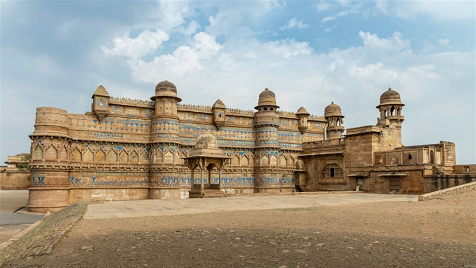
The Man Mandir Palace, constructed by Raja Man Singh Tomar between 1486 and 1516, is an architectural jewel of Gwalior Fort, known for its colorful tile work and intricate design. Once a royal residence and later used as a prison by the Mughals, the palace reflects a blend of Rajput and Indo-Islamic styles and echoes centuries of royal history.
ion of sculptures, coins, and artifacts from the 1st century BCE to the 17th century CE. Built by Raja Man Singh Tomar for Queen Mrignayani, the palace itself is a fine example of Indo-Islamic architecture, enhancing the museum's historical charm.